
Blue Dream Strain Indica or Sativa? Complete Guide
If you are searching for “Blue Dream strain indica or sativa,” the short answer is: Blue Dream is generally considered a sativa-dominant hybrid.
It is not technically a pure sativa or pure indica. Blue Dream is commonly documented as a hybrid created from Blueberry and Haze genetics, combining traits associated with both sides of the cannabis family tree. Leafly currently lists Blue Dream as a hybrid and describes it specifically as a sativa-dominant hybrid.
That distinction matters because the words indica and sativa do not always predict exactly how a particular cannabis product will feel. Genetics, phenotype, cultivation, cannabinoid levels, terpene composition, and the individual product can all influence the final experience.
What Is Blue Dream: Indica or Sativa?
Blue Dream is best described as a sativa-dominant hybrid.
Some cannabis databases simply label Blue Dream as a hybrid, while others emphasize its sativa-dominant characteristics. Leafly currently categorizes the strain as a hybrid and identifies its lineage as Blueberry × Haze.
So if you are choosing between the three basic categories:
- Indica: No
- Sativa: Not technically a pure sativa
- Hybrid: Yes
- Typical classification: Sativa-dominant hybrid
This is the most accurate way to answer the question “Is Blue Dream indica or sativa?”
Why Is Blue Dream Considered Sativa-Dominant?
Blue Dream’s reputation as a sativa-dominant hybrid comes from its Haze heritage and the way the cultivar is commonly described.
Haze is traditionally associated with sativa genetics, while Blueberry contributes genetics from the indica side. The resulting Blue Dream cultivar is therefore generally treated as a hybrid that leans toward sativa characteristics.
However, calling Blue Dream simply “sativa” leaves out an important part of its identity.
The hybrid classification recognizes that Blue Dream combines genetics from both sides rather than belonging exclusively to one category.
Blue Dream Genetics
The commonly reported Blue Dream lineage is:
Blueberry × Haze
This combination is one of the most recognizable features of the cultivar. Leafly identifies Blueberry and Haze as Blue Dream’s parent strains.
The Blueberry side is associated with the strain’s famous berry character, while Haze contributes to the cultivar’s traditionally sativa-leaning reputation.
Because cannabis genetics can vary between breeders, seed lines, phenotypes, and cuts, consumers should check the producer or breeder information when a specific Blue Dream product is being evaluated.
Is Blue Dream a Sativa-Dominant Hybrid?
Yes.
Although Blue Dream is generally categorized as a hybrid, it is widely described as sativa-dominant. Leafly specifically calls it a sativa-dominant hybrid and reports that its effects are mostly energizing.
This explains why you may see Blue Dream described in different ways online.
One website may simply call it a hybrid, while another may call it a sativa-dominant hybrid. Those descriptions are not necessarily contradictory.
The more complete description is:
Blue Dream is a hybrid with a sativa-dominant profile.
Blue Dream THC
There is no single THC percentage that applies to every Blue Dream product.
Cannabis potency can vary depending on the grower, phenotype, harvest, processing method, and individual batch. Leafly currently displays a 21% THC figure for its Blue Dream strain listing, but that should not be treated as the guaranteed potency of every Blue Dream product.
If you are buying Blue Dream flower from a retailer, the most useful number is the THC percentage printed on the current product label or certificate of analysis (COA).
For SEO purposes, this is also an important distinction between discussing the strain generally and describing a specific Blue Dream product.
What Does Blue Dream Taste Like?
Blue Dream is particularly well known for a sweet berry and blueberry character.
Leafly currently lists berry, blueberry, and sweet among the strain’s leading flavor descriptions.
Depending on the particular expression, consumers may also encounter additional fruity, herbal, earthy, or pine-like notes.
The exact flavor profile can vary from one grower and batch to another, so product-specific descriptions should always take priority over generic strain information.
Blue Dream Aroma
The aroma commonly associated with Blue Dream follows its recognizable berry profile.
You may encounter descriptions involving:
- Blueberry
- Sweet fruit
- Berry
- Herbal notes
- Pine
- Earthy notes
The exact aroma depends heavily on the plant’s terpene composition and how the flower was grown, harvested, cured, and stored.
Blue Dream Terpenes
Leafly currently identifies myrcene, pinene, and caryophyllene among the notable terpenes associated with Blue Dream.
Terpene levels are not fixed strain-wide numbers, however. Two Blue Dream products can have noticeably different terpene profiles.
For that reason, a product-specific COA is the best source when you want precise terpene percentages.
Myrcene
Myrcene is commonly associated with earthy and herbal aromatic notes and is reported among Blue Dream’s notable terpenes.
Pinene
Pinene is associated with pine-like aromas and is also reported in Blue Dream’s terpene profile.
Caryophyllene
Caryophyllene is known for its spicy and peppery aromatic character and is another terpene reported in Blue Dream.
What Are the Effects of Blue Dream?
Blue Dream is commonly associated with an uplifting and energetic profile.
Leafly’s current user-reported information lists creative, euphoric, and happy among its leading effects and describes the overall effect profile as mostly energizing.
Individual experiences can vary considerably, though.
The same product may feel different depending on the person’s tolerance, the product’s cannabinoid and terpene profile, and other factors. Strain names should therefore be treated as a useful starting point rather than a guarantee of a particular experience.
Is Blue Dream Good for Daytime?
Blue Dream is frequently described as having an energizing rather than strongly sedating profile, which is one reason it has developed a reputation as a daytime-friendly cultivar.
However, there is no guarantee that every Blue Dream product will produce the same experience.
If a specific product is being considered, look at its current laboratory results and producer information rather than relying only on the strain name.
Blue Dream vs. Indica
The biggest difference between Blue Dream and a typical indica classification is the direction of the cultivar’s commonly reported profile.
Blue Dream is generally described as a sativa-dominant hybrid, while indica-labeled cultivars are often selected by consumers looking for more traditionally relaxing or sedating profiles.
That does not mean every indica will feel the same or every Blue Dream will feel energizing.
Cannabis effects are more complicated than the indica-versus-sativa labels suggest.
Blue Dream vs. Sativa
Blue Dream has many characteristics that people associate with sativa cultivars, but calling it simply “sativa” is incomplete.
The more accurate description is sativa-dominant hybrid.
Its Blueberry × Haze lineage gives it a hybrid genetic background, while its traditional reputation and reported effects lean toward the sativa side.
Blue Dream vs. Blueberry
Blue Dream and Blueberry share part of their genetic story, but they are not the same strain.
Blueberry is one of the parents commonly identified for Blue Dream, while Haze is the other major parent.
This distinction is important when shopping because products labeled Blueberry, Blue Dream, or Blueberry Dream should not automatically be treated as interchangeable.
Blue Dream vs. Blueberry Dream
The names Blue Dream and Blueberry Dream sound similar, but they can refer to different cannabis products.
Leafly currently lists Blueberry Dream separately as a sativa strain and notes that its genetics are undisclosed.
That means consumers should check the exact product name, producer, genetics, and laboratory information rather than assuming that Blueberry Dream is simply another name for Blue Dream.
How Strong Is Blue Dream?
Blue Dream can be a relatively potent cannabis strain, but the actual strength depends on the individual product.
Leafly currently reports approximately 21% THC for its Blue Dream listing.
That number should not be used as a universal THC specification.
If you are comparing Blue Dream flower products, compare the actual THC percentage on each package or COA.
A product with the same strain name can have a different cannabinoid and terpene profile from another product grown by a different producer.
Blue Dream Appearance
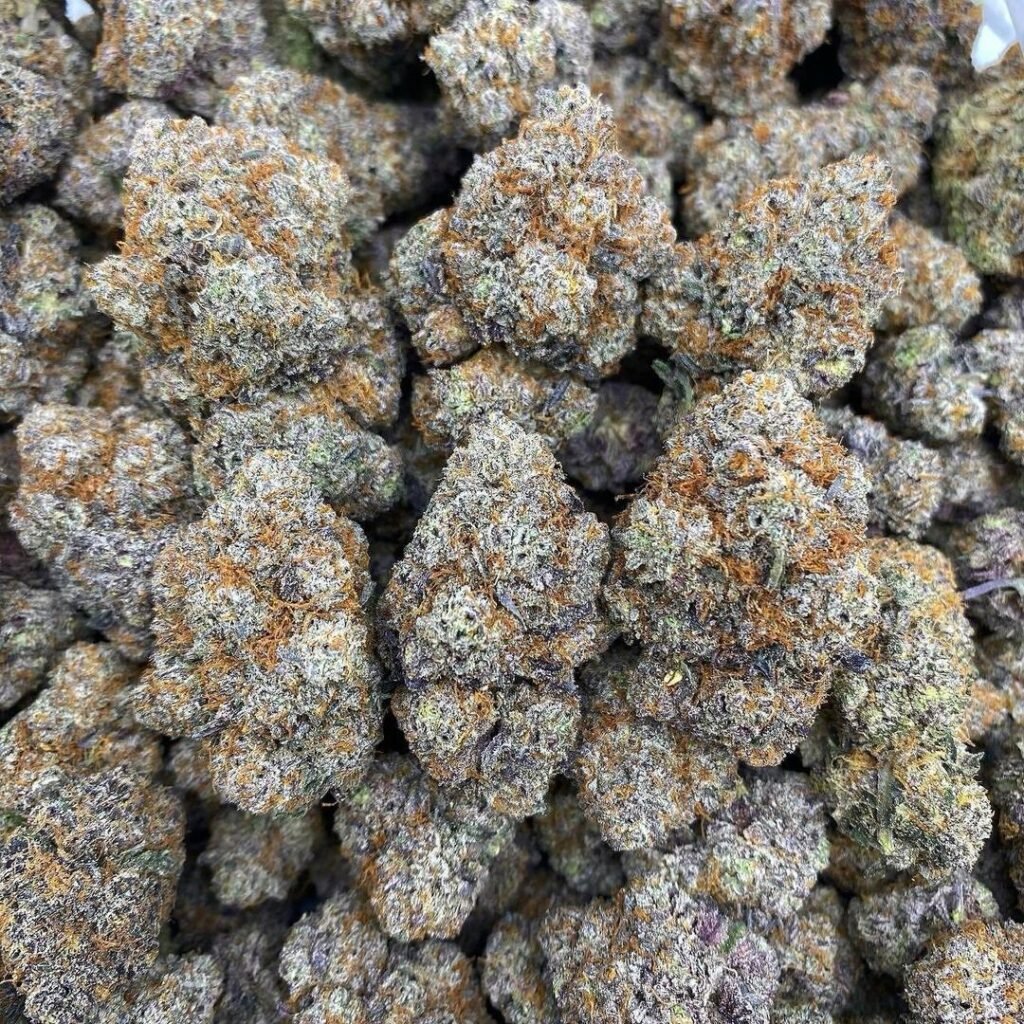
Blue Dream flower is commonly described as having green buds covered with visible trichomes and orange pistils.
The exact appearance can vary based on genetics, cultivation conditions, harvest timing, curing, and storage.
For a product review, it is better to describe what is actually visible in the current batch rather than promising that every Blue Dream flower will look identical.
Blue Dream Strain Review
Blue Dream remains one of the most recognizable cannabis strain names because it combines a familiar berry profile with a traditionally sativa-leaning hybrid identity.
Its commonly documented characteristics include:
| Feature | Blue Dream |
|---|---|
| Classification | Sativa-dominant hybrid |
| Common genetics | Blueberry × Haze |
| Flavor | Berry, blueberry, sweet |
| Reported terpenes | Myrcene, pinene, caryophyllene |
| Reported effects | Creative, euphoric, happy |
| General profile | Mostly energizing |
| THC | Varies by product and batch |
Leafly’s current strain information supports the hybrid classification, Blueberry × Haze lineage, berry-forward flavor profile, and commonly reported effects listed above.
Is Blue Dream Indica or Sativa? The Final Answer
So, is Blue Dream indica or sativa?
Neither exclusively. Blue Dream is a hybrid, and it is generally considered sativa-dominant.
Its commonly reported Blueberry × Haze genetics help explain why it occupies a middle ground between traditional indica and sativa classifications.
If you’re comparing Blue Dream products, don’t stop at the strain name. Check the producer, batch information, THC percentage, terpene results, and COA when available.
That gives you a much more accurate picture of the specific Blue Dream product you’re considering than the indica/sativa label alone.
Blue Dream Strain FAQ
Is Blue Dream indica or sativa?
Blue Dream is generally classified as a sativa-dominant hybrid, rather than a pure indica or pure sativa.
Is Blue Dream a hybrid?
Yes. Blue Dream is commonly classified as a hybrid, with a sativa-dominant profile.
What are the genetics of Blue Dream?
The commonly documented lineage is Blueberry × Haze.
Is Blue Dream strong?
Blue Dream can be relatively potent, but THC levels vary between products and batches. Leafly currently lists 21% THC for its Blue Dream strain entry, but consumers should check the current product label or COA for an exact product.
What does Blue Dream taste like?
Blue Dream is commonly associated with sweet berry and blueberry flavors.
What terpenes are in Blue Dream?
Leafly currently identifies myrcene, pinene, and caryophyllene among Blue Dream’s notable terpenes.
Does Blue Dream have indica genetics?
Blue Dream has hybrid genetics and is commonly described as Blueberry × Haze. Because Blueberry contributes genetics associated with the indica side while Haze is traditionally associated with sativa genetics, Blue Dream is generally described as a sativa-dominant hybrid.
Is Blue Dream the same as Blueberry Dream?
No. Blue Dream and Blueberry Dream are treated as separate strain names. Leafly currently lists Blueberry Dream separately as a sativa with undisclosed genetics.
Final Thoughts
The simplest answer to “Blue Dream strain indica or sativa?” is sativa-dominant hybrid.
Blue Dream is commonly associated with Blueberry × Haze genetics, sweet berry flavors, and an energetic, uplifting profile.
But the specific Blue Dream product matters. THC, terpenes, appearance, aroma, and overall experience can vary from one producer and batch to another.
For the most accurate product information, always check the current product label and laboratory results when available.